
Good oral hygiene is essential for preventing tooth decay, gum disease, and bad breath. While regular toothbrushing cleans the front, back, and chewing surfaces of your teeth, it cannot effectively reach the spaces between teeth where food particles and plaque often accumulate. This is where interdental brushes play a crucial role.
At QINGDAO LJS BRUSH CO., LTD, we manufacture high-quality interdental brushes designed to help people maintain optimal oral health. In this guide, we explain how to choose the right interdental brush size and how to use it effectively for daily oral care.
Why Is Cleaning Between Teeth Important?
Dental plaque and food debris can easily collect in the spaces between teeth. If not removed regularly, they may lead to:
- Gum inflammation (gingivitis)
- Periodontal disease
- Tooth decay
- Bad breath
- Implant complications
Daily interdental cleaning, combined with regular toothbrushing, helps maintain healthy gums and teeth while reducing the risk of oral health problems.
What Is an Interdental Brush?
An interdental brush is a small brush specifically designed to clean between teeth where conventional toothbrushes cannot reach.
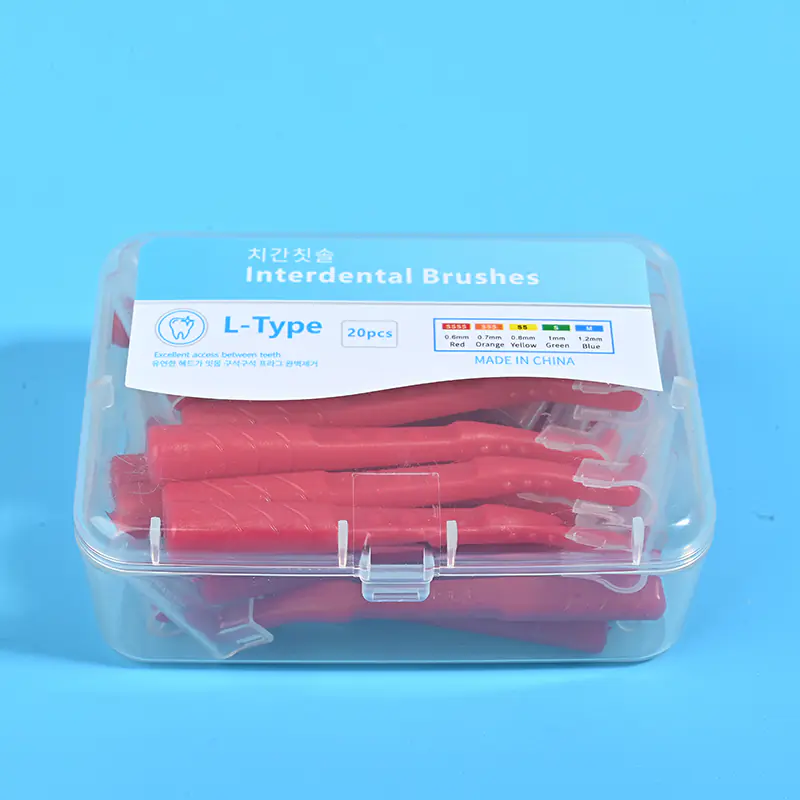

Interdental brushes are available in various:
- Sizes
- Colors
- Handle designs
- Wire diameters
- Bristle configurations
Selecting the correct size is critical for effective cleaning.
Choosing the Right Interdental Brush Size
Interdental spaces vary from person to person and even between different areas of the same mouth.
For an interdental brush to clean effectively:
✔ It should fit comfortably into the gap between teeth.
✔ The bristles should contact both tooth surfaces.
✔ The brush should not be too tight.
✔ The brush should not be too loose.
If the Brush Is Too Tight
Do not force the brush into the space.
A brush that is too large may:
- Damage gum tissue
- Cause discomfort
Instead, choose one size smaller.
If the Brush Is Too Loose
A brush that moves freely without touching the teeth may not remove plaque effectively.
Choose a larger size for better cleaning performance.
Multiple Sizes May Be Needed
Many individuals require more than one interdental brush size because the spaces between teeth are not always the same throughout the mouth.
During periodontal or gum treatment, larger brush sizes may become necessary as inflammation decreases and spaces become more accessible.
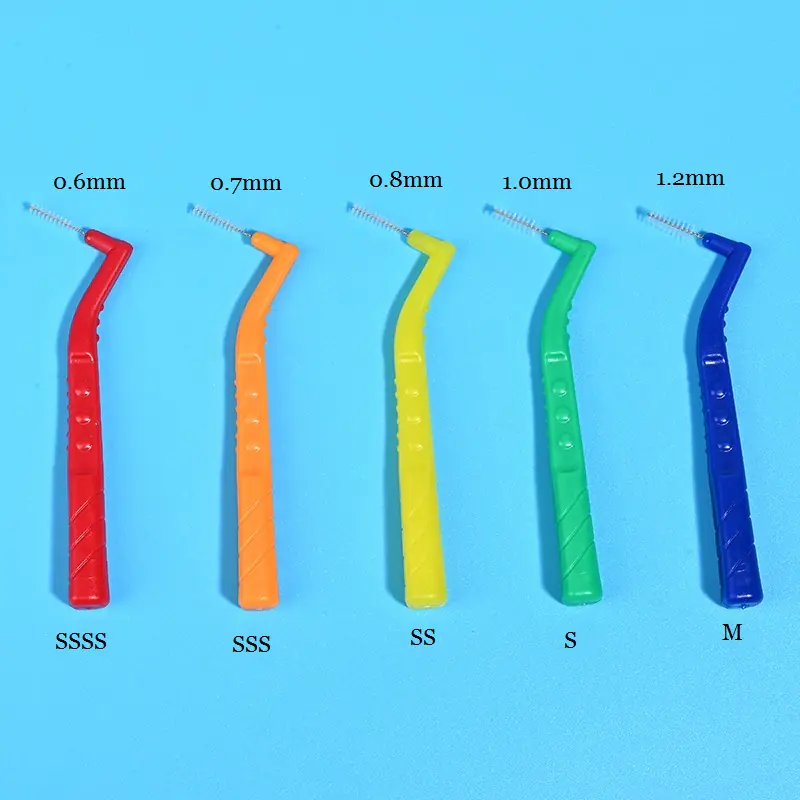
Common Interdental Brush Handle Designs
Straight Handle Interdental Brushes



Straight-handle brushes are commonly used for:
- Front teeth
- Easily accessible spaces
- General daily cleaning
They can also be used for back teeth, although bending the wire may sometimes be necessary.
Angled (L-Shaped) Interdental Brushes


Angled interdental brushes are particularly effective for:
- Back teeth
- Hard-to-reach areas
- Molars
- Orthodontic appliances
The angled design allows easier access without bending the wire.
Step-by-Step Guide: How to Use an Interdental Brush
Step 1: Hold the Brush Correctly
Hold the interdental brush comfortably between your thumb and index finger.
Maintain a relaxed grip for better control.
Step 2: Position Yourself in Front of a Mirror
Using a mirror helps ensure accurate placement and prevents injury to the gums.
Step 3: Insert the Brush Gently
Carefully slide the brush into the gap between two teeth.
Never force the brush.
If insertion is difficult, select a smaller size.
Step 4: Move the Brush Back and Forth
Once positioned correctly:
- Move the brush gently back and forth
- Use the full length of the brush
- Repeat approximately 5 times
This helps remove plaque and food particles from both tooth surfaces.
Step 5: Clean All Interdental Spaces
Repeat the process throughout the mouth using the appropriate brush sizes for each area.
Is Bleeding Normal?
Some people experience slight bleeding when they first begin using interdental brushes.
This can occur because:
- The gums are inflamed
- Plaque has accumulated
- Gum disease may be present
In many cases, regular cleaning improves gum health, and bleeding gradually decreases.
If bleeding persists, consult a dental professional.
Cleaning and Maintaining Your Interdental Brush
To maximize hygiene and brush lifespan:
During Use
Rinse the brush frequently under running water to remove debris.
After Use
- Wash thoroughly with clean running water
- Allow the brush to air dry
- Store in a well-ventilated location
When to Replace
Replace the interdental brush when:
- Bristles become worn
- The wire becomes bent
- Cleaning effectiveness decreases
Using worn brushes may reduce cleaning performance.
Using Interdental Brushes Around Implants
Dental implants require excellent oral hygiene to maintain long-term success.
Interdental brushes can effectively clean around implants by:
- Gently inserting the brush into the space around the implant.
- Moving it back and forth carefully.
- Removing plaque and trapped debris.
Regular cleaning helps maintain healthy implant tissues.
Cleaning Dental Bridges with Interdental Brushes
Interdental brushes are also highly effective for dental bridge maintenance.
To clean around a bridge:
- Insert the brush beneath or around the bridge area.
- Move it gently back and forth.
- Remove food particles and plaque accumulation.
Daily cleaning helps support healthy gums and prolong bridge longevity.
Benefits of Daily Interdental Brush Use
Using interdental brushes daily can help:
- Remove plaque effectively
- Improve gum health
- Reduce gingivitis risk
- Prevent cavities between teeth
- Freshen breath
- Clean around implants and bridges
- Support professional dental treatment outcomes
Why Choose Interdental Brushes from QINGDAO LJS BRUSH CO., LTD?
QINGDAO LJS BRUSH CO., LTD specializes in manufacturing high-quality interdental brushes for global oral care brands, distributors, wholesalers, pharmacies, and dental suppliers.
We provide:
- L-Type Interdental Brushes
- I-Type Interdental Brushes
- Soft Rubber Interdental Brushes
- OEM & ODM Manufacturing
- Private Label Solutions
- Custom Packaging Development
- Bulk Wholesale Supply
Our products are designed to meet international quality standards and support the growing demand for effective oral hygiene solutions worldwide.
Conclusion
Daily interdental cleaning is an important part of maintaining healthy teeth and gums. Choosing the correct brush size, using proper cleaning techniques, and replacing brushes regularly can significantly improve oral hygiene outcomes.
Whether cleaning between natural teeth, around implants, or under bridges, interdental brushes provide an effective and convenient solution for removing plaque and debris from hard-to-reach areas.
By incorporating interdental brushes into your daily oral care routine, you can help protect your smile and maintain healthier gums for years to come.